
Learn to skip as an adult
For fitness or fun: the basics first, then the tricks.
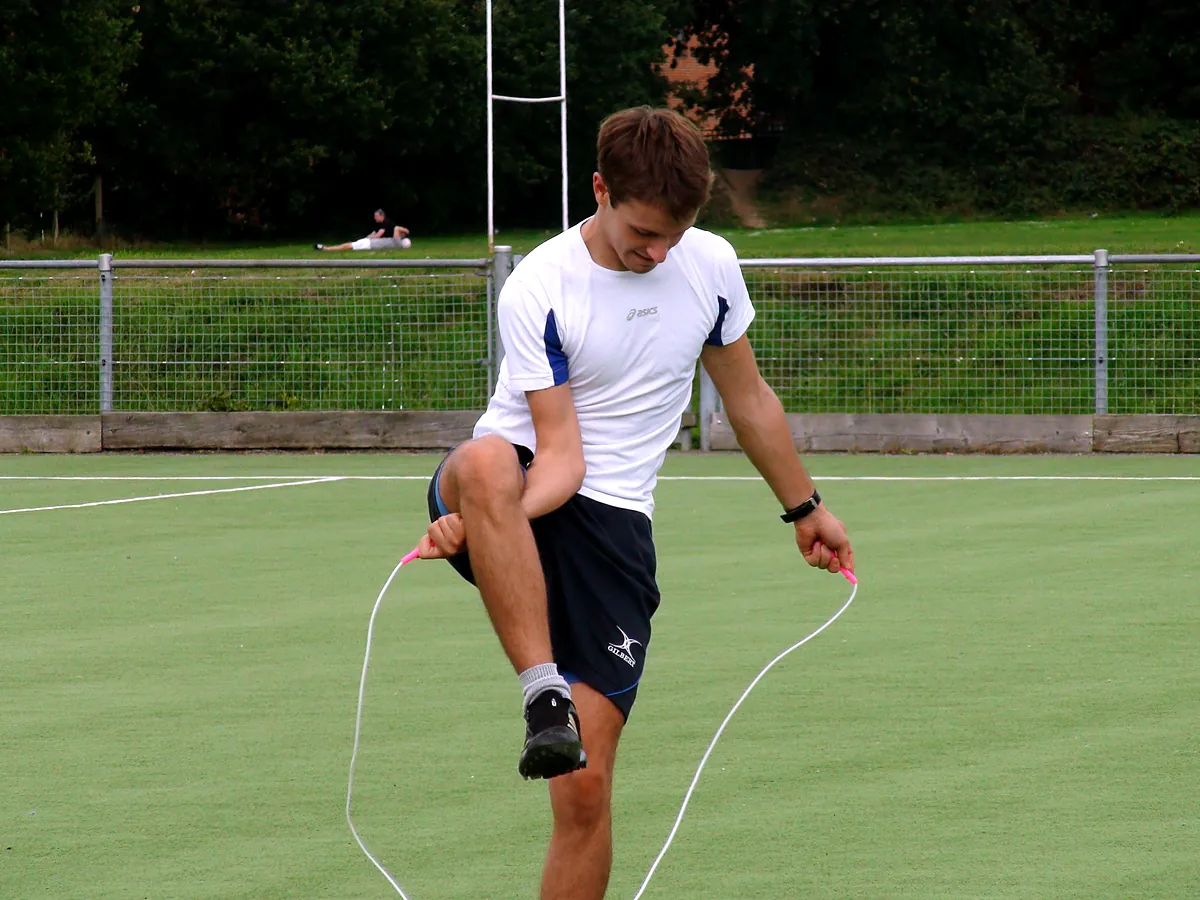
Skipping is one of the quickest workouts there is. It needs one rope and a few square metres, and it builds fitness, timing and coordination. If you haven’t skipped since school, start here: the basics first, then a simple plan, then the tricks.
Get set up
Rope length. Stand on the middle of the rope; the handles should reach just below your armpits. Most adults need a 2.8 m rope. See the rope size guide.
Surface. A wooden floor, a rubber mat or a smooth outdoor surface. Avoid deep carpet, which grabs the rope, and rough concrete, which wears it.
Shoes and space. Trainers with some cushioning, and room overhead and either side: about an arm’s length all round.
Your first session
- Stand tallElbows in, hands just in front of your hips, rope behind your heels.
- Turn from the wristsSmall circles from the wrists, not big circles from the shoulders.
- Small jumpsJump just high enough for the rope to pass, two or three centimetres, landing softly on the balls of your feet.
- Start with the double bounceOne turn, two small bounces. It gives you time to find the rhythm. See the double bounce.
- Move to the single bounceOne turn, one bounce. This is the base for almost every other skill. See the single bounce.
- Work in short rounds30 seconds skipping, 30 seconds rest, six to ten rounds. Count your skips in each 30 seconds and try to beat it.
Common mistakes, and how to fix them
- Hands too high or too wide. The rope gets shorter and hits your feet. Keep your elbows close to your sides and your hands at hip height.
- Jumping too high. You tire quickly and land heavily. Aim to clear the rope by a couple of centimetres.
- Landing on your heels. Stay on the balls of your feet with soft knees.
- Looking down. Look ahead. Your feet will find the rope.
- Jumping before the rope arrives. Listen for the rope touching the floor and jump just as it does.
A simple four-week start
| Week | Each session (three a week) |
|---|---|
| 1 | Six rounds of 30 seconds skipping, 30 seconds rest. Double bounce, then single bounce. |
| 2 | Eight rounds of 30 seconds. Count your skips and try to beat your best round. |
| 3 | Six rounds of 45 seconds, 30 seconds rest. Add the boxer skip. |
| 4 | Six rounds of 60 seconds, 30 seconds rest. Mix single bounce, boxer skip and side straddles. |
Warm up first with a few minutes of easy movement, and stop if anything hurts. If you have a health condition or haven’t exercised for a while, check with your GP before you start.
Both Lee and Scott have run taster sessions for me within DC Leisure and the response from the site managers has been overwhelming. … any age or ability would benefit and enjoy from the fun and effective way to keeping active … not just because it keeps you fit....but because it is FUN!
Where to go next
When the single bounce feels easy, try these, in roughly this order:
- Boxer skip: shift your weight from foot to foot.
- Side straddles: feet apart, feet together.
- Running on the spot: a quick, steady speed step.
- The crossover: your first real trick.
- Double unders: two turns of the rope in one jump.
Every skill is on skip-hop Skills, step by step.
Questions people ask
How long does it take an adult to learn to skip?
Most adults find the rhythm again in one or two sessions. Skipping continuously for a minute or more usually takes a couple of weeks of short, regular practice.
Is skipping good exercise?
Yes. It raises your heart rate quickly and works the legs, shoulders and core, and you can do it almost anywhere with one rope. Start with short rounds and build up.
Why do I keep tripping on the rope?
Usually because the hands are too high or too wide, the jump is too big, or the rope is the wrong length. Keep the elbows in, turn from the wrists and jump just high enough for the rope to pass.
What rope should an adult use?
Most adults up to about 1.83 m (6′) need a 2.8 m rope. Stand on the middle: the handles should reach just below your armpits. See the rope size guide.
Is it bad for your knees?
Skipping well means small, soft jumps on the balls of the feet, which keeps the load low. Skip on a forgiving surface in trainers, build up gradually, and if you have a joint or health problem, check with your GP first.