
Skipping in Schools
How to get every pupil skipping, from Reception to Year 6: a goal for every child, lessons any teacher can run, the right ropes and a league to aim for.
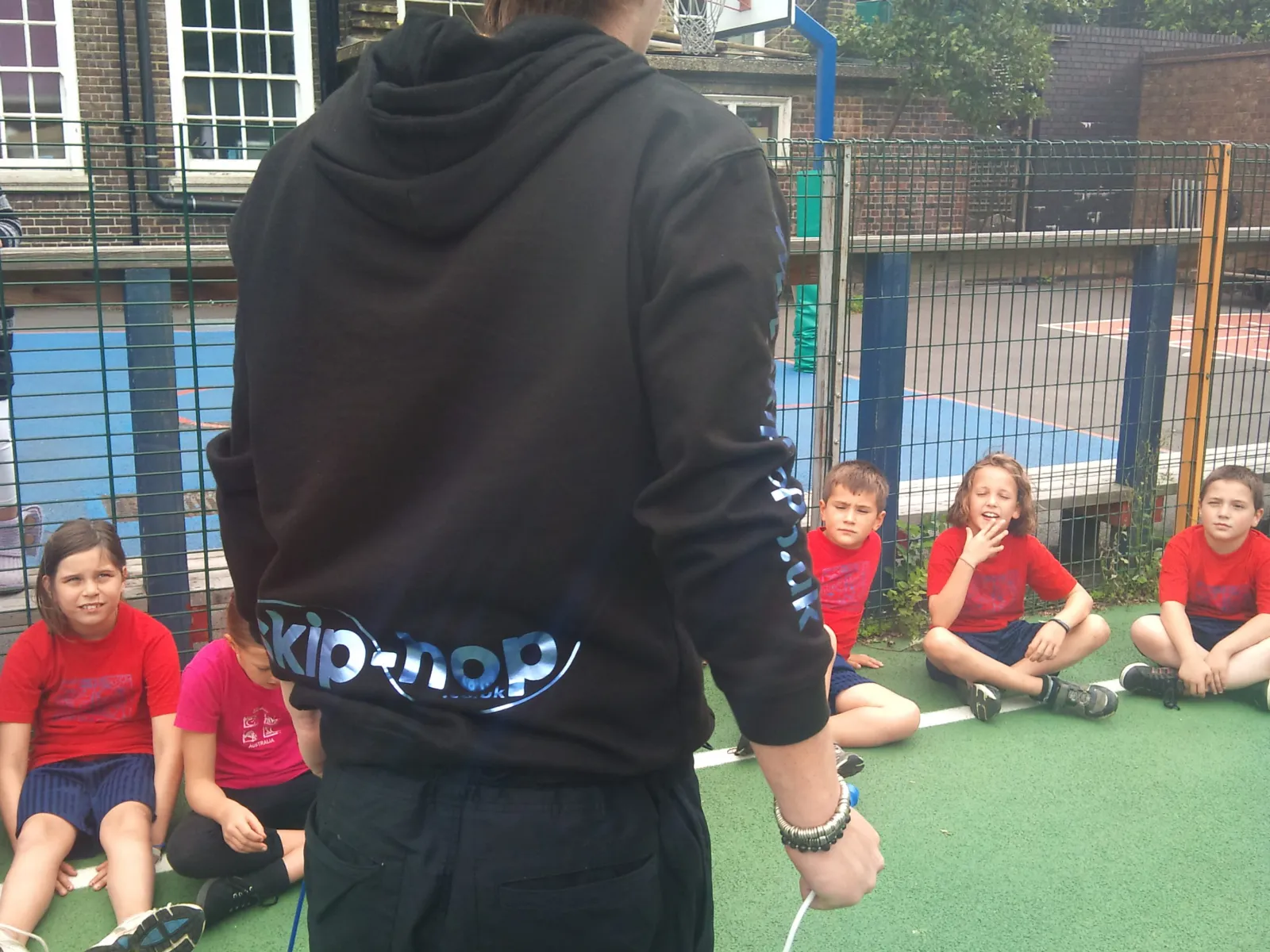
skip-hop taught skipping in UK schools from 1997, in nursery classes, primary and secondary schools, special schools and secure units. We no longer run workshops for pupils. Instead, everything our coaches taught is here, and skip-hop teaches the teachers on training days, so your own staff can lead skipping with confidence.
A skipping school needs five things: a goal for every pupil, a plan for the lessons, coaching for the skills, ropes that fit, and something to compete in. This page takes you through each one.
Five steps to a skipping school
Want to try a lesson first? Registered schools can open the free lesson tasters: the first lesson of each unit, plus our Long Rope and Double Dutch lessons.
Why skipping works in school
- It counts towards the daily hour. The UK Chief Medical Officers advise children and young people aged 5 to 18 to average at least 60 minutes of moderate or vigorous physical activity a day across the week, and the NHS lists skipping as one of the activities that count.
- It builds muscle and bone. Jumping is one of the muscle- and bone-strengthening activities the guidelines ask children to do each week.
- It needs very little space or kit. A hall, a playground or a corridor, and a rope per child.
- Every child can succeed. Skills progress in small steps, so beginners and confident skippers work side by side, each on their own Award.
- It gets children working together. Partner skipping, long rope games and Double Dutch rely on timing, turn-taking and communication.
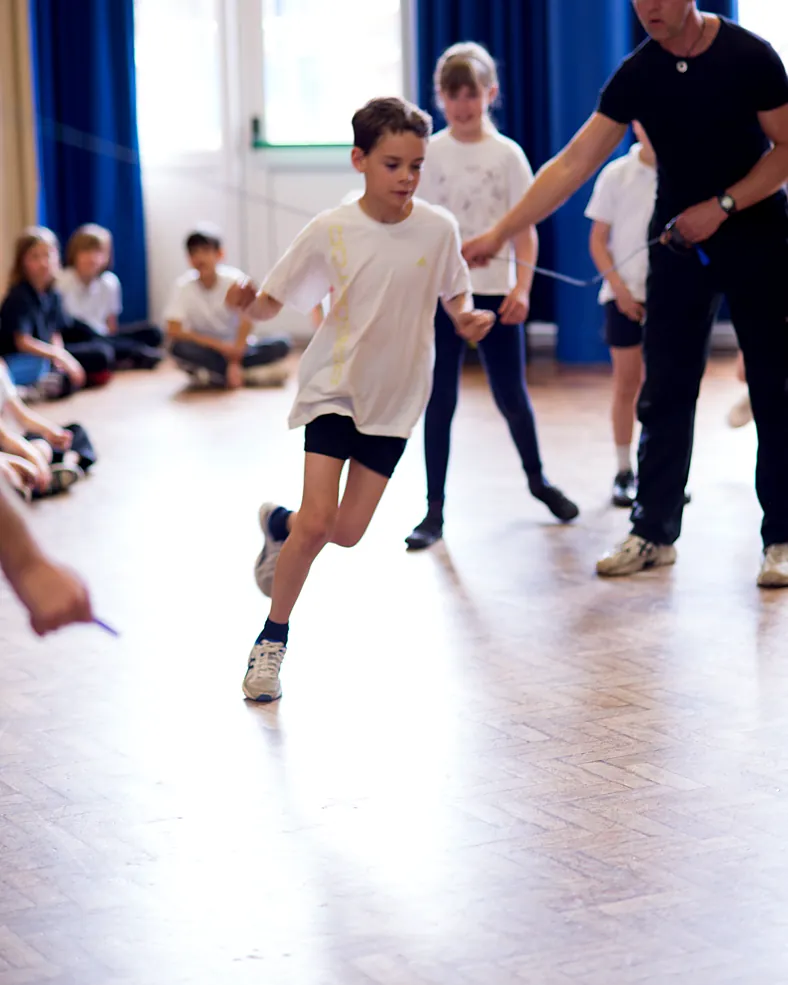
What to teach at each stage
The Awards loosely follow the year groups, but children move on whenever they’re ready.
| Stage | Awards | Scheme of work unit | Good starting points |
|---|---|---|---|
| Nursery and Reception (EYFS) | WhiteYellow | Ready, Steady, Jump! | Jumping over a still rope on the floor, Under the Moon, rocking the rope gently (Rock the Baby), first turns of their own rope. |
| Key Stage 1 (Years 1 and 2) | OrangeGreen | Skipping Foundations | Ten skips in a row, skipping backwards, counting out loud, running into a turning long rope, simple counting rhymes. |
| Lower Key Stage 2 (Years 3 and 4) | BluePurple | Skills and Tricks | Beginner tricks such as straddles, crosses, slaloms and bells, partner skipping, long rope games and a first routine. |
| Upper Key Stage 2 (Years 5 and 6) | RedBlack | Tricks, Teams and Double Dutch | Side swings, crossovers, turns, double unders, team partner skills, Double Dutch and a performance. |
| Confident skippers and Key Stage 3 | BronzeSilverGold | Medal awards | Linked routines of advanced tricks, speed and endurance challenges, and skipping for fitness. |
Playtimes and clubs
Skipping keeps going outside PE. A long rope and a queue of pupils will fill a playtime, and the old playground rhymes give everyone something to count and chant.
- Long rope games, from Figure of Eight to Clusterjump
- Traditional skipping rhymes, with how to play each one
- Double Dutch for an after-school club
Skipping for pupils with SEND
Our coaches worked in special schools and secure units for years, and almost any skill can be adapted. Every Award’s assessment guide includes ideas like these:
- A rope with foam handles, or a slightly longer rope, gives a slower, bigger turn.
- A beaded rope turns more slowly for pupils who need more time.
- Accept a double bounce, or hold up fingers instead of counting out loud.
- In the long rope, an adult can stand beside the pupil and jump with them.
- A pupil who uses a wheelchair can turn a long rope seated, or show rhythm and counting by turning a rope to one side of the chair.
Read how the whole site is built for every pupil, and the thinking behind it: SEND and inclusion at skip-hop and our article Fit the activity to the child.
From schools that worked with skip-hop
Everyone really enjoyed the sessions (staff and children) and there’s lots of skipping every play time.
Everyone at Annyalla National School had a great day skipping with skip-hop. The kids are still skipping on the yard during play times. Your coach had a fantastic way of engaging all the children and teachers during the day.
What skip-hop does for you
Head teachers, PE leads, class teachers, School Games Organisers and Active Partnerships each get something different.
skip-hop teaches the teachers. A training day for PE leads and teachers, for one school or a group of schools. Find out about training days →
Questions schools ask
Does skip-hop still run skipping workshops?
Not for pupils. After a quarter of a century of school workshops, we have put everything our coaches taught into this site: the Skipping Awards, the scheme of work, coaching for every skill and the ropes to go with them. We now run training days for teachers instead, for one school or for a group of schools through an Active Partnership.
Do teachers need to be able to skip?
No. Every lesson is written for class teachers, with teaching points, common faults and how to fix them. The lessons run from the board, so the class can follow the trainers and timers, and All-Access Skip Pass members get video for every skill.
How much space do we need?
Very little. A hall, a playground or a cleared classroom is enough. Each pupil needs about an arm’s length of space all round to turn their own rope; long rope games need a strip about 8 metres long.
What size skipping ropes do pupils need?
As a guide, 2.1 m for Reception to Year 2, 2.5 m for Years 3 to 6, and 2.8 m for secondary pupils and adults. To check a rope, stand on the middle: the handles should reach the armpits.
Can we pay by purchase order?
Yes. Schools can pay by card, or by invoice with a 30-day purchase order. skip-hop is not VAT registered, so the price shown is the price you pay.
How does the All-Access Skip Pass work?
One whole-school pass covers every teacher: the scheme of work, the Skipping Awards assessment guides and certificates, coaching and video for every skill. It is £149 a year, or £399 for 3 years, with a free 30-day trial and no automatic renewal.